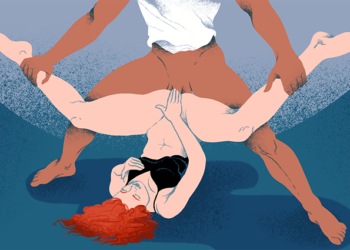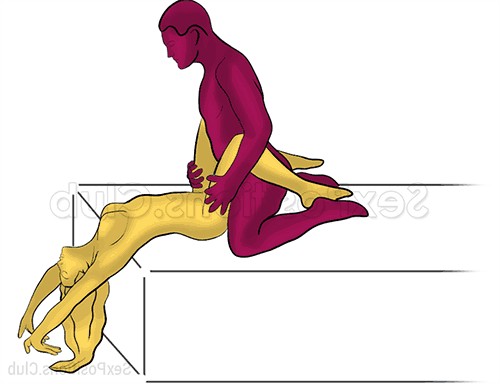
The waterfall sex position is an arrangement in which one partner lies on their back at the edge of a bed, with their head and shoulders hanging slightly over the side, while the other partner positions themselves at the edge. The name comes from the cascading, head-back posture. It is not a clinical term, and sources describe it with small differences, so it helps to treat it as a general approach rather than one fixed technique.
How the Position Is Arranged
The partner on the bed lies face up with their hips near the mattress edge and their upper back and head extending past it. The other partner stands or kneels at the edge, facing them, so both bodies line up along the side of the bed.
The head-back angle is what defines the position. It changes the sensations of the person lying down, since blood flow shifts toward the head and the body feels weightless. It also changes the line of the neck and throat, which is why comfort and safety matter more here than in many other positions.
What Draws People to Head-Off-the-Bed Positions
Couples usually try upside-down sex positions for novelty. A different head angle can make familiar intimacy feel new, and the shift in blood flow gives some people a lightheaded or heightened sensation.
Bed height also affects how well the position works. A mattress at roughly hip height for the standing partner tends to make the alignment easier, which means a low bed or a very tall one may need adjusting. No research shows that this position improves satisfaction or intensity, so any added sensation is personal and varies from person to person.
Setting It Up Step by Step
Learning how to do the waterfall position comes down to gradual, controlled steps.
Start with the bed height. Check that the edge of the mattress sits at a comfortable level for the partner who will be standing or kneeling. Pillows or a folded blanket can help raise or lower the working height.
Ease into the head-back angle. The person lying down should shuffle back slowly, stopping when their shoulders reach the edge. The head should drop only slightly at first, supported if needed by a hand or a stack of pillows on the floor.
Keep the neck neutral. Avoid letting the head hang fully or arch sharply backward. The neck should feel supported, not strained.
Agree on a stop signal. A simple word or tap works. Either partner should be able to end the position immediately.
Limit the time. Staying in a head-down position for long stretches can cause pressure in the head and dizziness. Short intervals followed by a change of position are more comfortable.
Waterfall Position Safety Tips
Waterfall position safety deserves real attention because of the head and neck angle.
Blood pressure in the head rises when it hangs below the heart, so this position is not suitable for everyone. People with high blood pressure, heart conditions, glaucoma or other eye pressure problems, vertigo, a history of stroke, or neck and spine injuries should talk to a doctor before trying any inverted position. Pregnant people should also check with their healthcare provider, since lying flat on the back later in pregnancy is often discouraged.
Stop at once if there is dizziness, a pounding headache, nausea, blurred vision, tingling in the arms, or neck pain. Sit up slowly afterward, because standing quickly can bring on lightheadedness.
The standing partner should also watch their own balance and avoid putting weight on the other person’s neck or throat. Any pressure there is risky, and unnecessary.
Variations to Match Comfort Levels
Several sex position variations ease the intensity while keeping the same general idea:
- Shoulders on the bed, head supported: The person lying down keeps their shoulders on the mattress and rests the head on a pillow at the edge, which cuts the downward tilt.
- Lower hang: A partial version where the head stays level with the bed but the body lies close to the edge for easier alignment.
- Seated or reclined alternative: One partner sits on the edge while the other leans back against a stack of pillows, offering a similar closeness without inversion.
Beginners often find these gentler options a better starting point. Basic sex position tips for beginners apply here too: go slowly, use pillows liberally, and adjust as you learn what works.
Talking It Through Before and During
Communication matters more than technique. Discussing comfort, limits, and any health concerns beforehand makes the experience safer and more enjoyable for both people. During the position, check in with brief questions or signals. Being willing to change or abandon a position is a sign of good communication, not failure.
Conclusion
The waterfall sex position is a head-back, edge-of-the-bed arrangement that some couples try for variety. It is simple to set up but demands care with the head and neck, so the key points are a gradual angle, a short duration, clear communication, and awareness of health conditions that make inverted positions unwise. If it doesn’t feel comfortable, a milder variation or a different position is a perfectly good choice.
FAQs
1. How long can you stay in a head-down position safely?
There is no fixed time, but short intervals are wise. Move out of the position as soon as you feel pressure, dizziness, or discomfort.
2. Does a mattress need to be a certain height?
Not strictly, but a mattress near hip height for the standing partner usually makes alignment easier. Pillows can compensate for height differences.
3. Can the position be adapted for people with limited mobility?
Yes. Keeping the shoulders on the bed and supporting the head with pillows reduces strain and can make it more accessible.
4. Is dizziness after the position normal?
Mild lightheadedness can happen when you sit up quickly. If dizziness is strong, lasts long, or comes with other symptoms, speak with a doctor.
5. Should alcohol be avoided before trying it?
It is wise to avoid it. Alcohol affects balance and judgment, and it can make dizziness harder to notice.
6. What if my partner is uncomfortable with the idea?
Respect that and choose something else. Comfort and consent matter more than any particular position.
7. Can pillows replace a bed edge entirely?
A reclined pillow setup mimics the closeness of the position without the head hanging down, so it works as a lower-risk alternative.