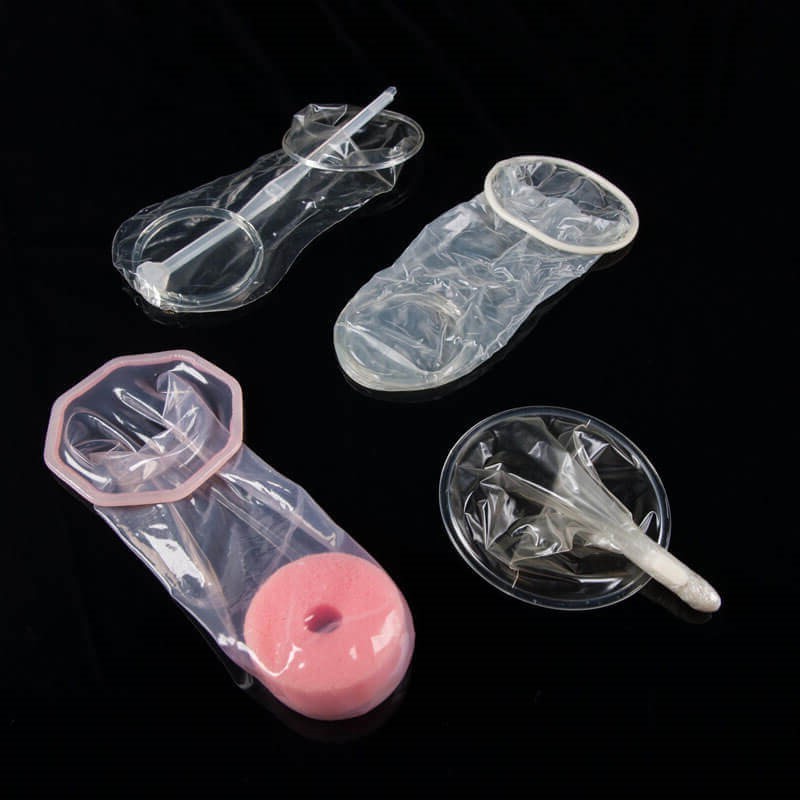
A female condom, also called an internal condom, is a thin pouch that sits inside the vagina during sex to block sperm and reduce the spread of sexually transmitted infections (STIs). It is made from nitrile or similar latex-free material, is used once, and contains no hormones. When used consistently and correctly, it is a reliable barrier method that gives the person using it direct control over protection.
How the Pouch Is Built and Why It Stays in Place
The device is a loose, lubricated sheath with a flexible ring at each end. The closed inner ring is squeezed and placed inside the vagina, where it rests against the cervix area and holds the pouch in position. The open outer ring stays outside the body and lies against the vulva.
Because the pouch lines the vaginal walls and the outer ring covers part of the surrounding skin, it creates a wider barrier than a condom worn on the penis. The material is thin enough that most people report normal sensation.
Putting It In: A Practical Walkthrough
Learning how to use a female condom takes a little practice, and many people find the second or third attempt much easier than the first.
- Check the expiry date and open the wrapper carefully. Do not use scissors or teeth.
- Find a comfortable position, such as standing with one foot raised, squatting, or lying down.
- Squeeze the sides of the inner ring together and slide it into the vagina as far as it will go.
- Leave the outer ring outside, covering the opening of the vagina.
- Guide the penis into the pouch, not between the pouch and the vaginal wall.
If the outer ring is pushed inside during sex, stop and reposition it. After sex, twist the outer ring to seal in fluids, pull the pouch out gently, and throw it in the bin. Never flush it.
One rule matters more than most: do not use a female condom and a male condom together. The friction between them can cause either one to slip or tear.
Protection Rates for Pregnancy and Infection
Female condom effectiveness depends heavily on how consistently and correctly it is used. Health agencies commonly cite about 95 percent effectiveness with perfect use and roughly 79 percent with typical use, which means around 21 in 100 users could become pregnant within a year under typical conditions. Most failures come from inconsistent use, not from the product itself.
Female condom STI protection is also well established. Like other barrier methods, it reduces the risk of HIV, gonorrhea, chlamydia, and trichomoniasis by limiting contact with fluids. Infections spread through skin contact, such as herpes and HPV, may also be reduced because the outer ring covers some of the surrounding area, although no barrier method removes the risk entirely.
Internal Condom vs. External Condom: Key Differences
The female condom vs. male condom comparison comes down to a few practical points.
- Who controls it: The internal condom is worn by the receptive partner, so protection does not depend on the other person’s cooperation.
- Timing: It can be inserted hours before sex, so it does not interrupt the moment.
- Material: Nitrile is safe for people with latex allergies and works with oil-based, water-based, and silicone lubricants.
- Fit: It is one size, so it avoids the fit problems some people experience with external condoms.
- Cost and access: It is usually more expensive and harder to find in stores than male condoms, though many clinics, health departments, and online retailers stock it.
Neither option is universally better. The best method is the one a person will use correctly every time.
Common Problems and How to Avoid Them
Most difficulties are mechanical and fixable. Slipping usually means the inner ring was not inserted deeply enough. Discomfort often improves with extra lubricant. A pouch that bunches up or twists is typically a positioning issue, and stopping to adjust it is better than continuing.
Single use is essential. Washing and reusing an internal condom is not safe, because the material can weaken and carry infection.
If the condom tears, slips out, or the penis enters beside it, emergency contraception should be considered as soon as possible, since its effectiveness drops with time. A pharmacist or clinic can explain the available options, and testing for STIs may be advisable depending on the situation.
Who Might Find It Most Useful
People who want a hormone-free method, who are allergic to latex, or who want to carry the responsibility for protection themselves often choose this option. It can also suit couples who prefer a method that can be put in place ahead of time. Anyone with concerns about fit, pregnancy risk, or infection exposure can get personalised guidance from a doctor, nurse, or sexual health clinic.
Conclusion
The female condom is a safe, hormone-free barrier that protects against both pregnancy and many STIs when used correctly. It takes a little practice, but the learning curve is short, and the benefits of control, timing flexibility, and latex-free materials make it a practical choice for many people. Correct insertion, careful handling, and using a fresh condom every time are what make it work.
Frequently Asked Questions
Does a female condom make noise during sex? Some people notice slight sounds at first. Adding more lubricant, either inside the pouch or on the outside, usually stops it.
Can I use one during my period? Yes. It can be used during a period, but remove a tampon or menstrual cup before inserting it, since the pouch needs room to sit properly.
Can my partner feel it? Most partners notice little difference. Because the material is thin and the pouch moves with the body, sensation is generally preserved.
How should I store it? Keep it in its sealed wrapper in a cool, dry place away from direct heat and sharp objects, and check the expiry date before each use.
Can it be used for anal sex? Some people use it this way, but most products are labelled for vaginal use only. Research on anal use is limited, so ask a healthcare provider for advice.
Is it available without a prescription? Yes. It can be bought at pharmacies and online, and it is often provided at low cost or free through clinics and public health programmes.